Questions and Answers
Quick episode takeaways from the C&C Auto Show on flood risks, used parts, warranties, and a few common fixes—built for clarity and easy reading.
How can flood-damaged vehicles end up for sale in other states?
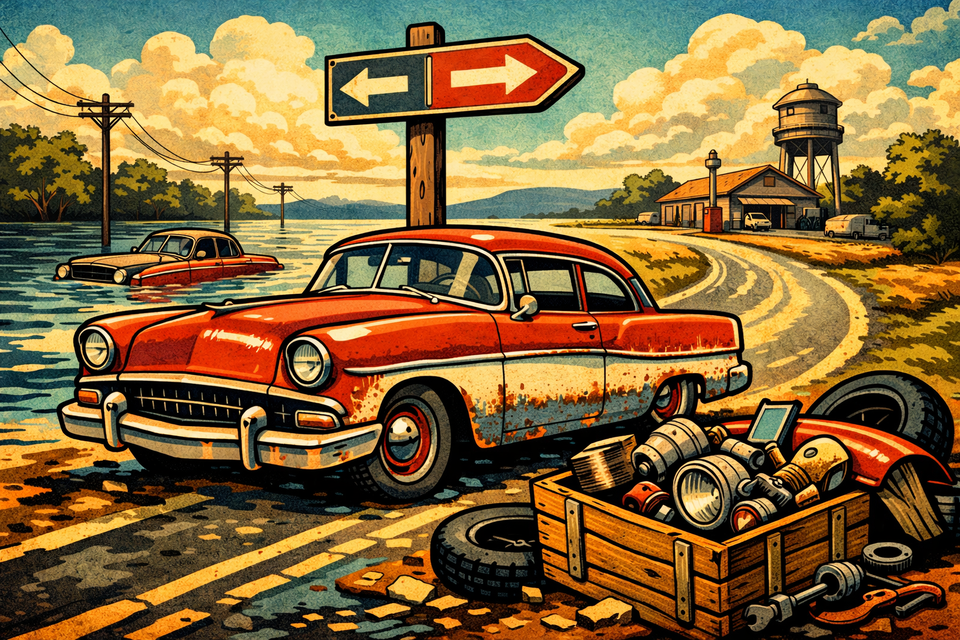
Flooded cars don’t always stay where the storm happened. They can be cleaned up, retitled, and moved through auctions or resold across the country. That’s why a vehicle history check and a hands-on inspection matter, even if the car looks spotless.
Where are the best places to check for hidden flood damage on a used car?
Look in spots that are hard to clean: under the dash, under the seats, and down in the trunk/spare tire wells. Also check tight crevices and hidden areas where silt or sand can linger. A thorough pre-purchase inspection can catch what a quick walk-around misses.
Is buying a used engine online a good way to save money—or a big risk?
A used engine can be a great value when it comes from a reputable source and is inspected properly. The risk goes way up when it’s bought “blind” online—water intrusion, rust, or internal damage can turn it into a boat anchor. Delays also add up when you’re waiting on multiple shipments.
Why can used electronic safety parts like blind spot sensors or front radars be a bad idea?
Those components are tied to your vehicle’s safety systems and often require programming and calibration. A used sensor may have unseen damage from a crash or water exposure, even if it looks fine. Saving money up front can lead to drivability issues, warning lights, or a repair that has to be done twice.
What’s the difference between OEM new, aftermarket, remanufactured, rebuilt, and used parts?
OEM new is the original manufacturer part; aftermarket is made by another company; remanufactured and rebuilt parts are reconditioned; used parts come off a donor vehicle. Each can make sense depending on what the part is and how critical it is to safety and reliability. The key is matching the right part type to the job—not just chasing the lowest price.
What should I know about warranties when a shop installs customer-supplied parts?
Shops can have limited or different warranty coverage when you supply your own parts. If the part fails, you may save on the part—but you can lose time, pay labor again, and deal with downtime. Always get the warranty terms in writing before the work starts.
My airbag light comes on and off—could it be related to the seat belt buckle?
Yes—on some vehicles, faults related to the seat belt buckle circuit or connectors can trigger an airbag warning. Intermittent lights often point to a connection or communication issue rather than a constant hard failure. Any airbag-system work should follow proper disable procedures (including battery disconnect) before unplugging connectors.
My Jeep (automatic) won’t crank unless I move the shifter out of Park and back—what is that?
That behavior points strongly to a transmission range sensor (often called the neutral safety switch). If the system doesn’t “see” Park or Neutral, it won’t allow the starter to engage. Replacing the range sensor—and sometimes the starter relay—typically solves it without a huge bill.
Do I need to replace a factory AGM battery with another AGM battery?
Yes. If your vehicle came with an AGM battery, it was designed for it. AGM batteries tend to last longer and handle modern electrical demands better, so replacing AGM with AGM helps maintain reliability and avoid weird electrical issues.
After replacing an ABS module, why would the ABS light stay on?
Many ABS modules need to be programmed or coded to the vehicle after installation. If it’s not configured correctly, the light can stay on even if the hardware is new. A shop with the right scan tool can confirm codes and complete the programming process.