
Storm Survival & Smart Driving: Real-World Car Tips That Matter
Watch Now
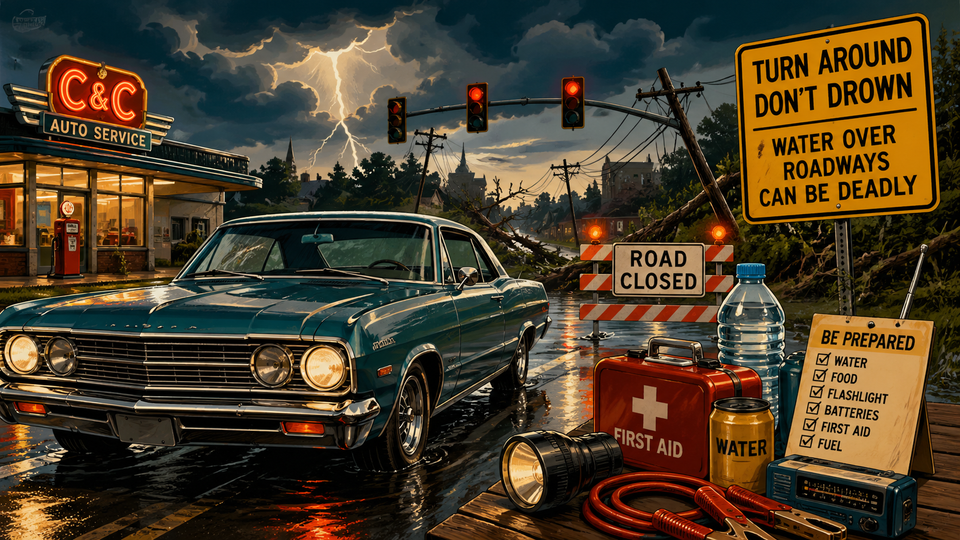
When severe weather hits, your vehicle becomes more than transportation—it becomes a lifeline. In this episode of the C&C Auto Show, the team shares real-world lessons learned after a powerful storm disrupted daily life across the region. From preparing your car before a storm to avoiding costly damage during heavy rain, this conversation blends practical advice with firsthand experience.
You’ll hear how quickly conditions can change, why staying informed matters, and what simple steps can help protect both your vehicle and your safety. The episode also dives into common automotive issues like carbon buildup in modern engines, plus smart maintenance habits that can prevent bigger problems down the road.
Whether you're dealing with power outages, flooded roads, or just want to be better prepared next time, this episode delivers straightforward, experience-based guidance every driver can use.
Tune in to hear the full conversation and get practical tips you can apply right away.
When severe weather hits, your vehicle becomes more than transportation—it becomes a lifeline. In this episode of the C&C Auto Show, the team shares real-world lessons learned after a powerful storm disrupted daily life across the region. From preparing your car before a storm to avoiding costly damage during heavy rain, this conversation blends practical advice with firsthand experience.
You’ll hear how quickly conditions can change, why staying informed matters, and what simple steps can help protect both your vehicle and your safety. The episode also dives into common automotive issues like carbon buildup in modern engines, plus smart maintenance habits that can prevent bigger problems down the road.
Whether you're dealing with power outages, flooded roads, or just want to be better prepared next time, this episode delivers straightforward, experience-based guidance every driver can use.
Tune in to hear the full conversation and get practical tips you can apply right away.