
Auto Start-Stop, Diesel Trucks & High-Mileage Decisions: What Drivers Need to Know
Watch Now
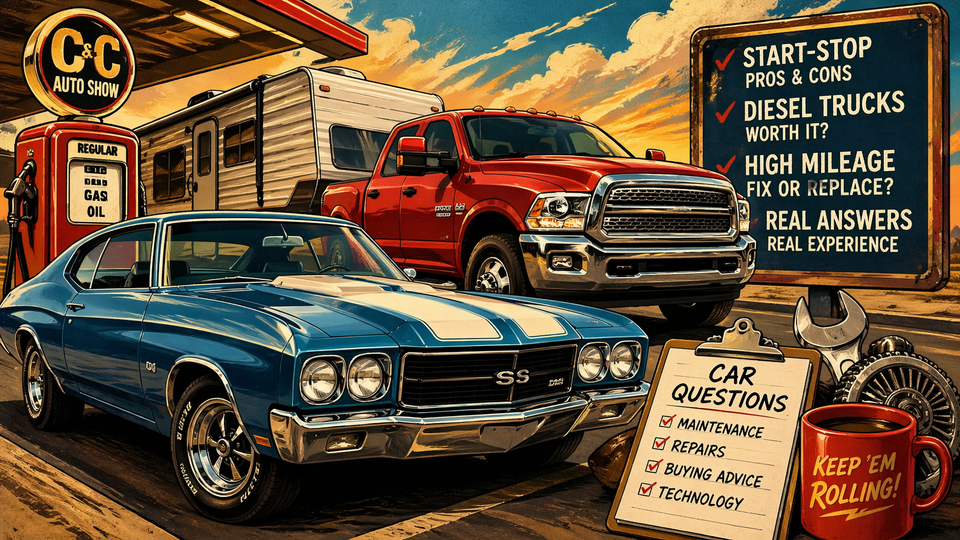
From modern fuel-saving technology to real-world repair decisions, this episode of the C&C Auto Show tackles the questions drivers are asking right now. The crew breaks down auto start-stop systems, whether they actually save fuel, and if they cause long-term wear. They also dive into the pros and cons of diesel trucks, helping listeners decide if the extra maintenance is worth it for towing and heavy-duty work.
Listeners call in with real problems—from rough-riding SUVs to noisy manual transmissions—and get practical, money-saving advice you can actually use. The show also explores one of the toughest decisions car owners face: when to repair a high-mileage vehicle and when it’s time to finally let it go.
If you’ve ever wondered whether to fix, upgrade, or replace your vehicle, this episode delivers clear guidance with a mix of expert insight and real-world experience.
Listen or watch the full episode below to hear all the answers, opinions, and a few laughs along the way.
From modern fuel-saving technology to real-world repair decisions, this episode of the C&C Auto Show tackles the questions drivers are asking right now. The crew breaks down auto start-stop systems, whether they actually save fuel, and if they cause long-term wear. They also dive into the pros and cons of diesel trucks, helping listeners decide if the extra maintenance is worth it for towing and heavy-duty work.
Listeners call in with real problems—from rough-riding SUVs to noisy manual transmissions—and get practical, money-saving advice you can actually use. The show also explores one of the toughest decisions car owners face: when to repair a high-mileage vehicle and when it’s time to finally let it go.
If you’ve ever wondered whether to fix, upgrade, or replace your vehicle, this episode delivers clear guidance with a mix of expert insight and real-world experience.
Listen or watch the full episode below to hear all the answers, opinions, and a few laughs along the way.