Understanding the Collision Repair Process: From Damage to Done
Watch Now
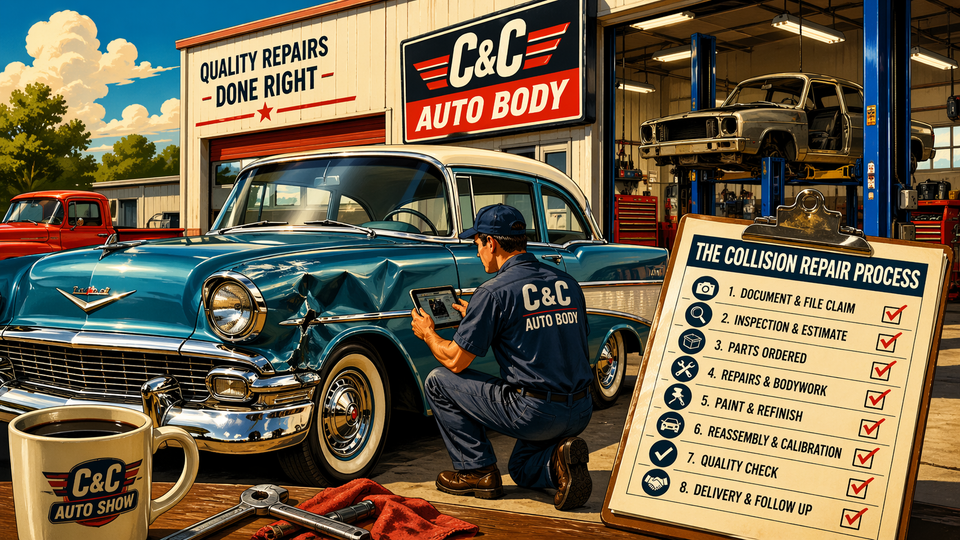
When unexpected damage happens—like a tree falling on your car or a sudden accident—the repair process can feel overwhelming. In this episode of the C&C Auto Show, the team walks step-by-step through what really happens after the damage occurs, starting with documenting the scene and contacting your insurance company, all the way through choosing a qualified repair shop and understanding your estimate.
You’ll learn why those first insurance estimates often change, how modern vehicles require advanced scanning and calibration, and what to look for when selecting a shop that can properly repair your specific vehicle. From certified technicians to understanding parts choices and repair timelines, this episode gives you a practical, real-world look at how collision repair actually works today.
Whether you’ve recently experienced damage or just want to be prepared before it happens, this conversation will help you make smarter decisions, avoid costly mistakes, and navigate the process with confidence.
Listen or watch the full episode below to get the complete breakdown from the experts.
When unexpected damage happens—like a tree falling on your car or a sudden accident—the repair process can feel overwhelming. In this episode of the C&C Auto Show, the team walks step-by-step through what really happens after the damage occurs, starting with documenting the scene and contacting your insurance company, all the way through choosing a qualified repair shop and understanding your estimate.
You’ll learn why those first insurance estimates often change, how modern vehicles require advanced scanning and calibration, and what to look for when selecting a shop that can properly repair your specific vehicle. From certified technicians to understanding parts choices and repair timelines, this episode gives you a practical, real-world look at how collision repair actually works today.
Whether you’ve recently experienced damage or just want to be prepared before it happens, this conversation will help you make smarter decisions, avoid costly mistakes, and navigate the process with confidence.
Listen or watch the full episode below to get the complete breakdown from the experts.