Skip to content

#1995 - Back-to-School Car Prep & Smart Used-Car Buying

Kwp image mar 2  2026  01 26 41 pm

Back-to-School Car Prep, Smart Used-Car Buying, and Recalls You Shouldn’t Ignore

Watch Now

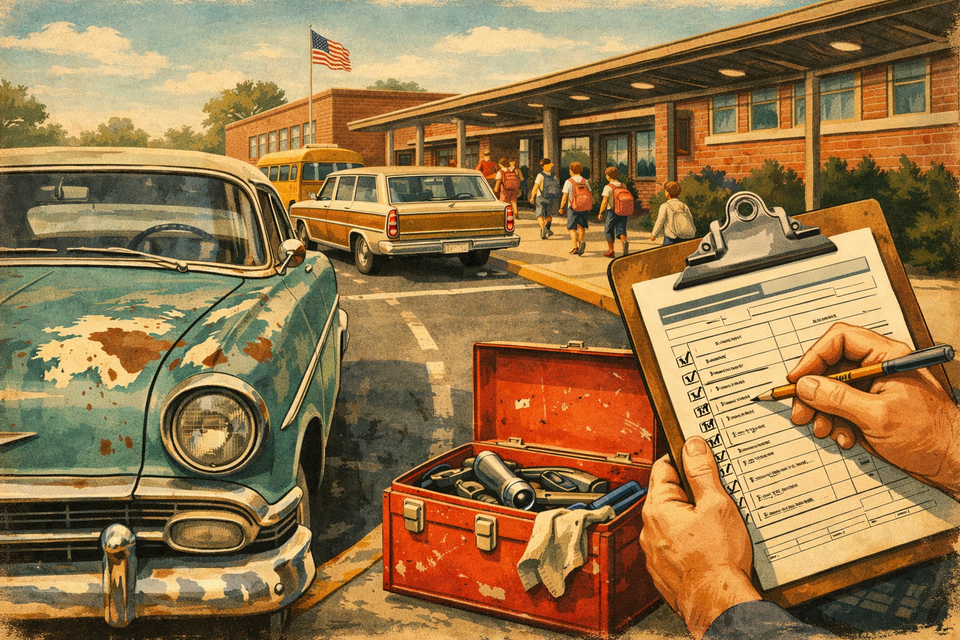
This episode of the C&C Auto Show covers the real-life stuff that hits families and commuters hard—getting your vehicle ready for the back-to-school routine, how to stay ahead on tires and batteries, and why planning maintenance beats getting surprised at the worst time.

The crew also dives into used-car buying moves that can save serious money (Carfax vs. a true pre-purchase inspection), what they’re hearing about the Route 66 extended warranty, and how to check your VIN for recalls or warranty extensions—plus a heads-up on Hyundai paint-peeling coverage. Listen or watch the episode to catch the full conversations, caller questions, and the team’s practical tips.

Questions and Answers

Fast, consumer-friendly answers pulled from this episode—maintenance tips, buying advice, and common problems we tackled on-air.

What should I check on my car before the back-to-school driving routine starts?

Start with safety basics: tires (tread and pressure), lights, fluids, and anything that could leave you stuck in a long school drop-off line. If you’re due for regular service, ask the shop to do a quick inspection while they’re changing the oil and topping off fluids.

How do I know when my tires are getting worn out—and when should I start shopping?

Use the penny test as a quick check—if you can see the top of Lincoln’s head, it’s time for tires. Even before you hit the legal limit, start shopping early so you can compare prices and avoid being forced into a rushed decision.

Why is it a good idea to keep more fuel in the tank than “almost empty”?

On many vehicles the fuel pump sits in the tank, and the fuel helps keep that electric pump cool. Running very low all the time can stress the pump, so keeping a reasonable amount of fuel in the tank is a smart habit.

How does the gas pedal make a modern car accelerate if it’s all electronic now?

Older cars used a cable linkage, but many modern vehicles use a sensor in the pedal to tell the computer how much power you’re requesting. The computer then controls an electric motor on the throttle body to let in more air and adds the right amount of fuel.

How does a manual transmission shifter and clutch make the car move?

The engine spins all the time, but the clutch lets you connect or disconnect that power from the transmission. When you select a gear, you’re choosing a gear ratio that changes how easily the car moves off the line and how it cruises at speed.

Which Hyundai models are getting paint-peeling coverage, and what should owners do?

If your Hyundai’s paint is peeling and you’re seeing large patches down to primer—especially on the roof, hood, or fenders—check for coverage. The show specifically discussed coverage for certain Elantra and Palisade model years and emphasized talking to the dealer because some vehicles may still qualify even when they’re older.

How do I check if my vehicle has an active recall or a warranty extension?

Write down (or snap a photo of) your 17-digit VIN from the windshield or door jamb, then check the NHTSA recall database and your manufacturer’s site. Recalls can apply even if you’re not the original owner, and it’s worth re-checking every 6–12 months.

Is the Route 66 extended warranty any good, and what should I watch for?

On the show, the team shared that they hear good things about Route 66 and that the biggest test is whether the company pays what the contract says it covers. Read the coverage details carefully—what’s included, what’s excluded, and what your deductible and claim process look like.

Should I still pay for a pre-purchase inspection if I have a Carfax report?

Yes—Carfax is helpful, but it only shows what’s reported and may not explain exactly what was done. A pre-purchase inspection (often in the $125–$175 range mentioned on the show) can uncover issues early and can even help you negotiate repairs or price before you buy.

My 2011 Corolla has a P0503 code and drives erratically—what should a shop check next?

Ask a shop to look for technical service bulletins (TSBs) tied to that code or symptom, then inspect wiring/grounds that could create a noisy or intermittent signal. The show also mentioned checking alternator diodes (bad electrical “noise” can confuse modules) and that some fixes may require reprogramming with factory-level tools.

Podcast Available On: