Skip to content

#1998 - EV Fire Risks, Electronic Door Safety & Smart Repair Advice

Kwp image feb 27  2026  03 27 55 pm

EV Fires, Electronic Door Handles, and Real-World Repair Fixes

Watch Now

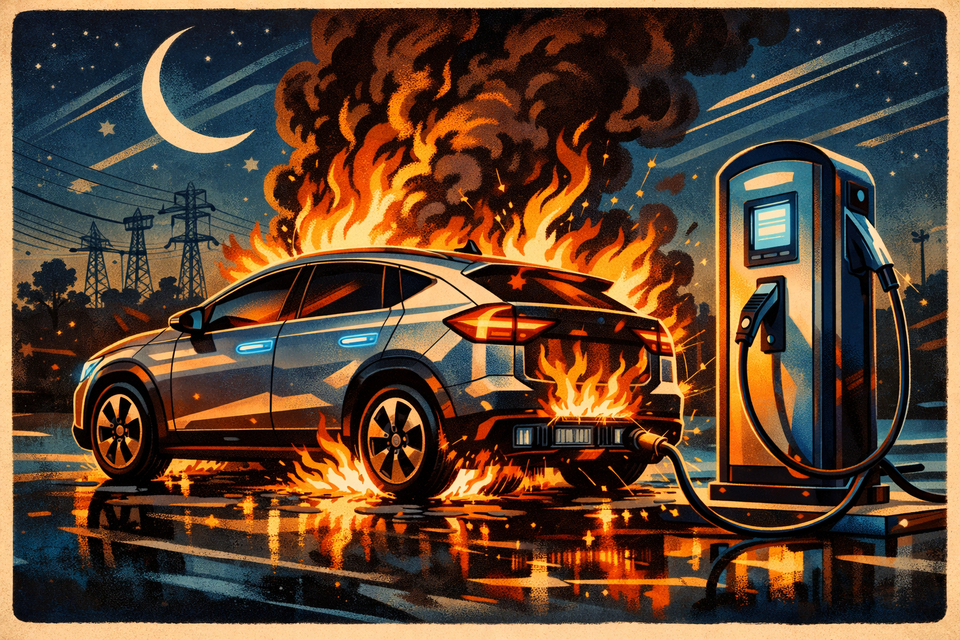
EV fires are a hot topic for a reason—when battery issues turn into a “thermal runaway,” the cleanup can be complicated for drivers, tow operators, shops, and first responders. In this episode, the crew breaks down why EV fires can behave differently than gasoline vehicle fires, what real shops are doing to isolate EVs after a collision, and why it’s smart to understand your car’s emergency exit options, especially on vehicles with electronic door handles.

You’ll also hear listener Q&A on common problems like a low-speed “slip” on a 2014 GMC Acadia, hard starting and fuel smell on a 2003–2004 F-150 5.4, LED tail lights causing turn signal issues, and more. Watch or listen to the full episode on the embedded player here at CCautoshow.com, or catch it on Facebook at facebook.com/ccautoshow.

Questions and Answers

Quick takeaways from this episode—EV fire safety, electronic door handles, and listener Q&A repair advice in plain English.

What’s the biggest difference between an EV fire and a gasoline vehicle fire?

Gas vehicles catch fire more often, but an EV battery fire can be more complicated to handle. EV battery fires can reignite and may take a lot more water and time for first responders. That’s why training and planning matter on both the consumer and responder side.

Why can electronic door handles be a safety issue after a crash?

On many newer vehicles, pulling the handle is really just activating a switch. If the vehicle loses electrical power in a crash or in water, the normal handle and even the windows may not work. It’s important to know where your vehicle’s manual release is before an emergency happens.

Can an EV battery reignite after it looks like the fire is out?

Yes—EV battery fires can come back after the initial event. That’s why towing yards, body shops, and fire departments often isolate the vehicle and monitor it. In some cases, the vehicle may need to sit and cool down in a controlled area.

How do collision shops handle EVs differently after an accident?

Shops may run specific tests and isolate the vehicle to check for battery damage that could lead to a thermal event. They may keep it separated from other cars and use special skates so it can be moved quickly if something starts to heat up. The goal is protecting people, the building, and every other vehicle on the lot.

What should I know about insurance coverage for EV safety procedures at a shop?

In this episode, a local shop owner shared that insurers often push back on paying for extra EV-related procedures and equipment. But safety still requires training, testing, and proper handling. If you’re in a collision, ask your shop what steps they’re taking to keep the vehicle safe while it’s in their care.

My 2014 GMC Acadia sometimes feels like it slips at low speed—what’s a smart first step?

The show recommended scanning the vehicle with the right equipment to see what the computer has stored, since some transmission-related codes don’t show on basic readers. At around 75,000 miles, a full transmission fluid exchange was recommended as a good next step. They also suggested having mounts checked during service, but a mount failure at that mileage was described as less likely.

Why did my 2003–2004 Ford F-150 5.4 start hard, use more fuel, and act weird when it’s hot?

They pointed to the thermostat as a common first step, because if it sticks open the engine can run “cold” and the computer may add extra fuel. That can hurt fuel economy and cause odd drivability symptoms. If you replace cooling components, follow the correct bleed procedure so air pockets don’t cause new problems.

What is a DVI inspection, and why does the show keep recommending it?

A DVI (digital vehicle inspection) is a structured check that documents what’s good now and what’s coming due. It typically includes items like lights, wipers, battery condition, fluid levels, tire pressures, and service intervals. The idea is to help you plan repairs before they become urgent.

Why do my turn signals flash fast or slow after installing LED tail lights?

LED tail lights can change the electrical load and confuse older flasher systems, causing “hyperflash” or odd flashing behavior. The show suggested looking into an LED-compatible flasher or using inline resistors if you want to correct it. If it’s not creating a safety issue, you may decide to live with it—but verifying all bulbs/lights still matters.

My 2001 F-150 has fuel pressure at the tank but none at the fuel rail—what could cause that?

Based on the call, the show suggested looking at the fuel pressure regulator as a possible cause. If the regulator is stuck open, pressure may not build where it should up front. They also reminded DIYers to keep fire safety in mind whenever working with fuel.

Podcast Available On: