Skip to content

#2015 - Holiday Rush Repairs, Hidden Wiring, and Calibration Must-Dos

Kwp image feb 16  2026  02 04 15 pm

Calibrations, Battery Survival, and Why “The Code” Isn’t the Diagnosis

Watch Now

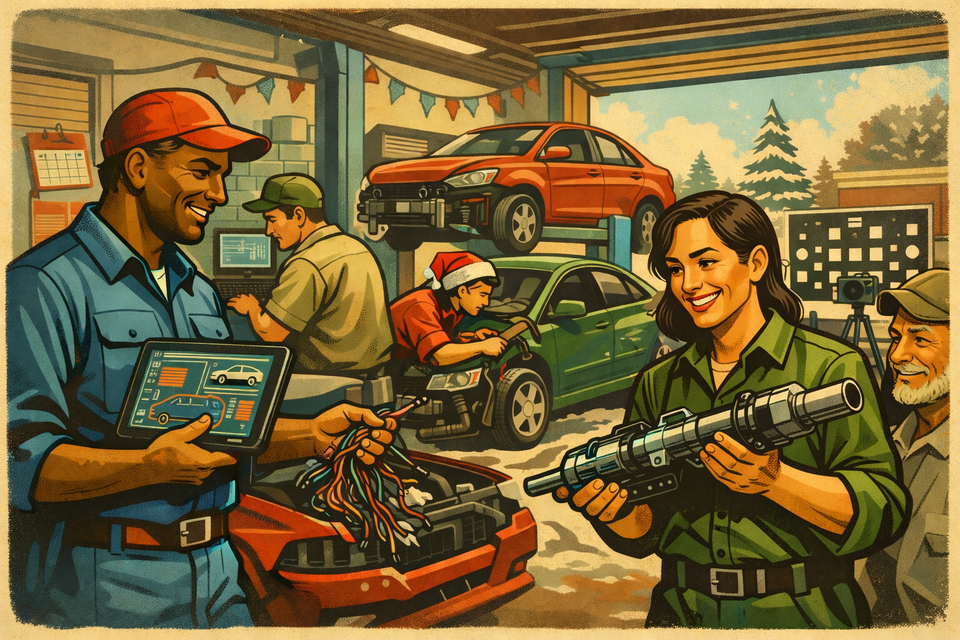
This episode is a mix of real shop-life pressure and real-world car ownership—especially when you’re trying to get vehicles fixed fast around the holidays. From a front-end Nissan repair that looked finished until the post-scan exposed a deeper wiring issue, to the reminder that a trouble code doesn’t always mean “replace the part,” the crew breaks down what actually keeps repairs accurate and safe.

You’ll also hear practical guidance on protecting batteries during repairs, preventing rodent damage, choosing smart parts when OEM availability is rough, and why modern maintenance (coolant and transmission fluid exchanges) matters more than it used to. Listen or watch the embedded episode for the full conversation and the shop-tested tips.

Questions and Answers

Quick takeaways from this episode—calibrations, maintenance, parts availability, and smart repair decisions.

Why didn’t replacing the front sensors fix the Nissan after the collision?

Because the sensors weren’t the root problem. The wiring harness had multiple damaged wires inside the insulation, even though the outside looked fine. Once the wires were repaired, the codes cleared and the system came back online.

Does a trouble code always mean the part named in the code is bad?

Not necessarily. Codes point you toward a system and a symptom, but the cause can be wiring, connectors, leaks, or module communication. A proper diagnostic process can save you from buying expensive parts you don’t need.

What’s the advantage of a post-scan after collision repair?

A post-scan helps confirm sensors and safety systems are communicating correctly after the work is done. It can reveal issues that aren’t obvious during a visual check. Catching problems before delivery helps avoid comebacks and safety risks.

How can Dorman parts help when OE parts are on backorder?

In the episode, a Dorman assembly was available locally when the manufacturer part wasn’t. Some Dorman components come pre-assembled, so the shop can bolt it on instead of pressing bearings and hubs together. That can save time and get a vehicle back on the road faster.

Why do rodents cause such expensive damage under the hood?

Rodents can chew wiring and create shorts that take out modules and harnesses. Modern harnesses often run through large sections of the vehicle, so repairs can be labor-intensive. Even a small chewed area can turn into a big electrical headache.

What can collision shops do to keep batteries from dying during repairs?

Charge weak batteries quickly, disconnect the battery when a vehicle will sit, and keep the key off during electrical work. If the vehicle is going to be down for a while, a battery maintainer helps prevent deep discharge. Batteries that sit discharged are much more likely to fail.

What’s the safest way to disconnect and reconnect a battery to avoid voltage spikes?

Disconnect the negative cable first and do it cleanly—don’t let it bump the post repeatedly. When reconnecting, connect positive first and then negative, again avoiding repeated contact. Always double-check polarity (red to +, black to −) and keep the key off.

How often should I consider a transmission fluid exchange on modern vehicles?

The show’s rule of thumb was around 40,000 miles for many vehicles, especially with multi-gear transmissions that run hotter. A full fluid exchange replaces more old fluid than a simple pan drain. It’s about maintaining lubrication and reducing wear over the long haul.

Why are newer radiators and heater cores more prone to restriction?

Many modern designs use much smaller passages to increase heat transfer efficiency. That also means debris or coolant breakdown can clog them more easily. Regular coolant exchanges help prevent buildup that you can’t simply ‘flush out’ later.

After a collision, why would a steering column need to be measured?

Some steering columns can partially collapse by an inch or two and still look normal. Certain manufacturers require removal and measurement to confirm it hasn’t collapsed. If it’s missed, it could affect restraint performance and safety in a future crash.

Podcast Available On: