Skip to content

#2019 - Car Tech, Data Risks & Real-World Repairs

Kwp image feb 10  2026  03 34 42 pm

2026 Cars, Data, and Driver Tech: What You Need to Know

Watch Now

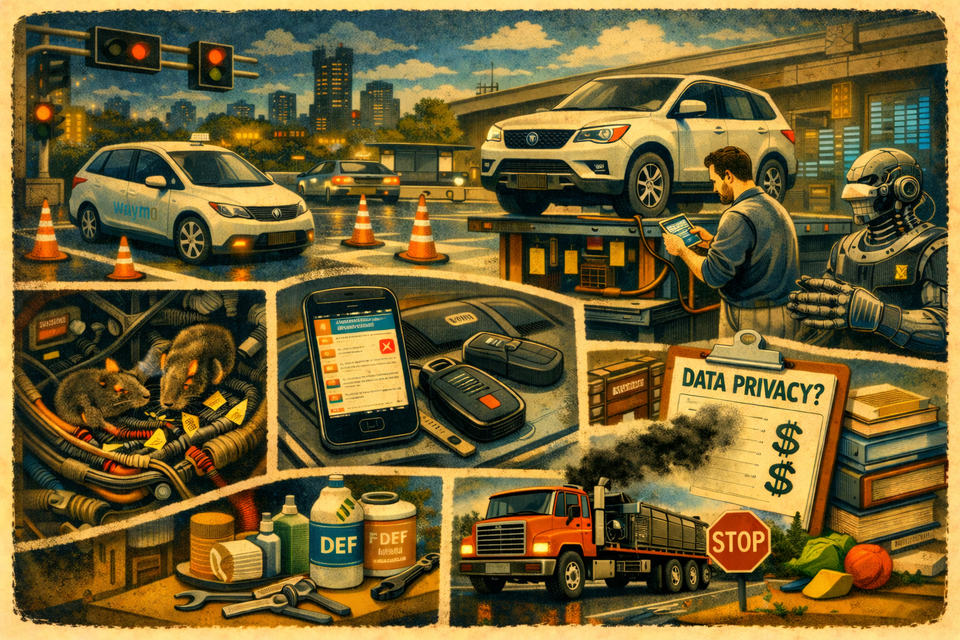
From self-driving cars getting confused in a blackout to rental-car infotainment draining someone’s bank account, this episode is a reality check on where vehicle tech is headed—and what drivers need to watch out for right now.

The crew also tackles real-world problems like rodents chewing wiring harnesses, why so many transmissions no longer have dipsticks, what “diesel delete” really costs you long-term, and how AI is changing the insurance and repair experience. Listen or watch the embedded episode for the stories, tips, and the “don’t-learn-this-the-hard-way” advice.

Questions and Answers

Quick episode takeaways on 2026 vehicle tech, data privacy, repair trends, and the everyday problems drivers are facing.

Why did self-driving cars stall during a power outage?

The episode highlighted how a blackout can remove the visual cues autonomous cars rely on—like working traffic signals and clear lane markings. In pitch-dark intersections, some self-driving cars simply stopped because they didn’t know how to proceed safely. It’s a reminder that edge cases still create real-world chaos.

How can syncing your phone to a rental car cost you thousands?

If you plug in and “sync” your phone, the car can store contacts, call history, and sometimes saved credentials or access paths. The show shared a story where the next renter used that saved info to steal from the previous driver. Always remove your phone profile and delete personal data before returning a rental.

What should you do before a totaled vehicle leaves the shop or tow yard?

Don’t just grab your personal items—make sure your personal data is wiped from the vehicle’s infotainment system. If your accounts, contacts, or navigation history are still stored, the next owner can potentially access them. Ask the shop (or dealership) to clear saved profiles before the vehicle is released.

Is rodent damage to wiring covered by insurance?

The show discussed how rats and mice can chew wiring harnesses and create repairs ranging from hundreds to many thousands of dollars. In many cases, comprehensive coverage may apply, especially on newer vehicles where the wiring damage can be extensive. It’s worth getting an estimate first and then deciding whether to file a claim.

What are practical ways to keep rodents out of your engine bay?

The episode mentioned common deterrents like peppermint scent, mothballs, and dryer sheets, plus purpose-built rodent prevention products. The goal is to make the area smell unpleasant and discourage nesting. If you park near fields or wooded areas, periodic inspections can catch early signs before major damage happens.

Why do so many newer vehicles have no transmission dipstick?

Transmission fluid level changes with temperature, and people were accidentally overfilling by checking it cold. Many manufacturers moved to sealed systems with a specific check procedure done at a certain temperature, often verified with a scan tool. It’s not “unserviceable”—it’s just not a driveway dipstick check anymore.

When should transmission fluid be serviced on a sealed transmission?

The show’s guidance was around the 60,000-mile range for a fluid exchange on many vehicles, especially if you plan to keep it long-term. A proper exchange replaces old fluid with new fluid at the correct level and temperature. The big key is doing it proactively—before the transmission starts acting up.

How often should I change full synthetic oil?

The recommendation in this episode was a simple rule: about every 5,000 miles (or roughly five months). Even if your car’s reminder system suggests longer intervals, the show noted that shorter intervals tend to prevent problems over the long haul. Consistency matters more than stretching it.

What is a “diesel delete,” and why do the hosts warn against it?

A diesel delete removes or bypasses emissions systems like the DPF and SCR/DEF setup. The episode emphasized that newer systems are better than early versions, and deleting can create backpressure issues, cooked components, and major headaches. It can also cost you dealership support and warranty options.

Are radar and sensor systems causing more cars to be totaled?

The show discussed how modern repairs can include cameras, radar units, software resets, and calibrations—raising the cost of even “small” collisions. That can push some vehicles into total-loss territory faster than in the past. It also makes post-repair accuracy a bigger deal than ever for safety systems.

What’s the concern with vehicles collecting and selling driver data?

The episode covered how cars can store driving behavior and location-related data, and how that information may be monetized. There was discussion of a bill aimed at giving owners more control and opt-out rights. The takeaway: know what your vehicle saves, and don’t assume your car is “just a car” anymore.

Podcast Available On: