Questions and Answers
Fast, consumer-friendly answers based on this episode’s conversation—maintenance, coverage, and today’s car technology.
Is a transmission fluid exchange still recommended on modern vehicles?
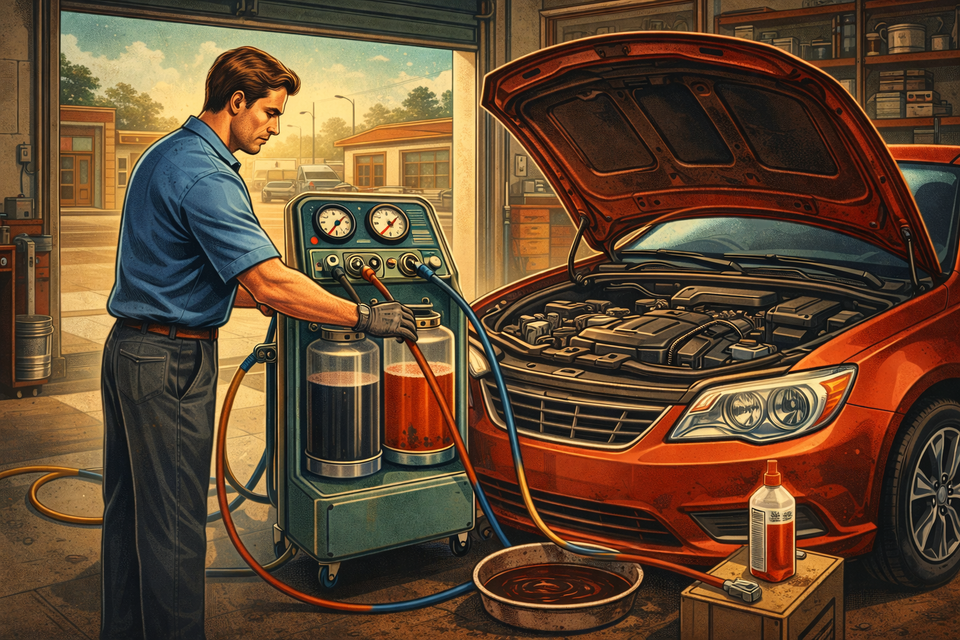
Yes—today it’s often best to do a total fluid exchange using equipment that replaces fluid ounce-for-ounce. That approach helps get old fluid out of the converter and valve body without creating leaks from a bent pan or a bad seal. Clean fluid can help a transmission shift smoother and last longer.
Should I do a transmission fluid exchange around 100,000 miles?
If the fluid isn’t burnt-looking and you’re not already having transmission problems, an exchange around 100,000 miles is typically a solid preventative move. At very high mileage (think 175,000–200,000+), it can be riskier because the transmission may already be near failure and people blame the new fluid. When in doubt, check the owner’s manual and talk with a shop you trust.
Why do you recommend a fluid exchange instead of dropping the transmission pan?
Older “drop the pan” services caused problems: bent pans, wrong filters, and over/under-filling at the wrong temperature. Many newer transmissions use screens instead of a traditional filter, so there’s often no need to drop the pan at all. An exchange also avoids mixing a little new fluid with a lot of old fluid in a system that holds much more than what drains from the pan.
How do ADAS sensors and calibrations affect collision repairs today?
Collision repair isn’t just bumpers and fenders anymore—there are sensors and ADAS components tucked in those areas. After a hit, shops may need mechanical help and calibrations to return the vehicle to safe, correct operation. That’s why communication between collision and mechanical shops (and with the customer and insurer) matters more than ever.
What should drivers consider before choosing a very high deductible (like $5,000)?
A high deductible can lower your premium, but it can also leave you stuck when you need the coverage. If you’d struggle to come up with $1,000, a $5,000 deductible can be a financial emergency after a wreck. Only choose a high deductible if you truly have the savings and a backup transportation plan.
What does an OEM-only policy mean, and when are OEM parts worth it?
An OEM-only policy is designed to prioritize Original Equipment Manufacturer parts in repairs. With modern vehicles—especially where sensors and fitment matter—OEM parts can be important for proper function and safety. Aftermarket parts still have a place, but many drivers want the choice, and these policies are one way to get it.
Why is rental car coverage an important add-on to your policy?
It’s usually inexpensive, and it can save you a lot of hassle after a wreck. Without rental coverage, you may be paying out of pocket while your car is in the shop. It’s one of those small line items that can make a big difference when life gets interrupted.
How can a dash cam help you after an accident (and even at the repair shop)?
A dash cam can quickly settle “who was at fault” when stories don’t match—video is hard to deny. It can also help a shop understand how an impact happened (like a deer hit) and guide a more accurate inspection. Just remember: cameras can record shop visits too, so everyone should act like they’re on camera.
What is a “clipped” (cut-and-shut) car, and why should buyers avoid them?
A clipped car (sometimes called a cut-and-shut) is when parts of two vehicles are cut and welded together to make one. That can create serious safety and structural issues, especially with today’s materials, adhesives, and crash engineering. If you’re buying used, avoid sketchy deals, watch for branded/salvage titles, and get a pre-purchase inspection from someone you trust.
How can I protect my paint and interior from sun damage and heat?
Direct sunlight can fade and damage paint over time—and a repaint can be expensive. Regular waxing helps, and ceramic coating adds another protective layer if you’re trying to preserve a nice vehicle. Also consider a windshield sunshade and quality window tint (including ceramic tint) to cut heat and protect interior surfaces.